Showing posts sorted by date for query vht. Sort by relevance Show all posts

Saturday, August 30, 2014

What I have been doing....

I’ve been meaning to write this post for a while but I’ve been kinda busy. I wanted to apologize for making this blog into an All-About-The-Memphis-Mini-All-The-Time thing. But, that is what has consumed all my time and energy and money for the last 6 months or so. And it is a very cool little amp.

The original idea came from a conversation I had with Bruce Collins about building a small Champ clone that would sound great and sell for a very modest price. His excellent Delta Sonic amps start at under $800, so the new amp had to be less than that. After working the numbers Bruce decided to not produce the Champ clone and concentrate instead on the DS amps. I asked his permission to produce the amp and to adopt the name we had talked about: The Memphis Mini.

I had been impressed with the quality and sound of the VHT Special 6 amp, which is made in China. The tone was not what I was looking for but the amp blew away all my preconceived notions about Chinese amps being necessarily inferior. I contacted several Chinese vendors and factories to see what was possible, ordered a few examples, and eventually settled on what is now the best-selling custom harp amp I know of, The Memphis Mini.


The MM amp begins its life in a factory in Shenzhen, a very modern and prosperous city that is part of the Hong Kong mega metro. The chassis and cab are assembled there, along with some of the basic circuitry built to our specs. The amps are shipped to Denver where we add the speaker, tubes, a line-out circuit, and much of the tone stack circuit. I play every amp before it ships.

There are several things going on in the tone of the Memphis Mini amp: First, there is a bit of grit around the edges of the note. This is what some players call "a little hair on the notes." It is the first thing you notice when you first play the amp. The second thing is a nice crunch on the overtones when you play chords or octaves or multiple holes. Just opening your playing aperture a bit on draw notes to get a little of the adjacent notes will excite the tubes.

And finally the amp has a big punchy sound with a nice low end. All those things together make up the tone of the Mini amp. That is the sound I was going for when I first worked with this amp. I'm pretty excited about the way it turned out.


Changing your playing technique and the pressure on the microphone will change how these tonal parts interact with each other. You can get a lot of expression out of the amp that way. The line out circuit is designed so it carries these effects in its signal to the PA, so you always sound great.

Almost all of the buyers of the Memphis Mini amp say they plan to use it for gigging. That was my goal; to produce a moderately priced amp that had great tone and would be a tool for working players. I am very proud of it.

There is much I would like to tell about the whole experience, and I will over time here on this blog. Thanks for reading this.

Wednesday, October 24, 2012

Jam Amps

Players often leave their amps at home when heading to my jam since they know there will be at least one good harp rig they can use.  But a recent thread in Adam Gussow's blues harp forum got me thinking about all the different amps that have been honked on the stage at Ziggies over the last three years.  (At least the amps I can recall right now, in no particular order)

-Original 1959 Fender Bassman
-Fender '59 Bassman Reissue
-Mission Chicago 32-20 1x12 and 3x10
-Harpgear HG50 410
-Harpgear HG30 and 35
-Harpgear HG2
-Sonny Jr 410 and Super Sonny
-Sonny Jr Cruncher and Super Cruncher
-Fender BF Super Reverb
-Fender silverface Princeton
-Fender silverface Champ
-Fender Champion 600
-Fender Blues Jr.
-Fender Pro Jr.
-Fender’65 Princeton Reverb RI
-Peavey Delta Blues 210
-Kendrick Texas Crude
-Kalamazoo Model 1 from Greg Heumann
-Pignose 7-100 and HOG30
-VHT Special 6 Combo
-Weber 5F2H custom
-Masco ME-18
-Edward ED amp
-Fat Dog 2A and 4A

Wednesday, October 10, 2012

The Top Harp Amp Builders


Who are the top harp amp builders now?  Over the last several years it was pretty clear cut that Sonny Jr. amps were the biggest sellers and most respected among the dedicated harp amps available for sale.  But Gary Onofrio, the proprietor of SJ, has become ill and his website is gone.  As far as I know his amps are no longer available for sale.

Similarly, Meteor was a big player in the harp amp market but they seem to have taken a hiatus.  Their website has not been updated in years and I have not heard of anybody buying a new Meteor amp in quite a long time.  

Who does that leave?

-Harpgear.  They recently picked up the endorsement of RJ Mischo.  Their webite is active and they appear busy.

-Mission.  Bruce Collins is very busy delivering orders for his new amps.  And he has plans for future amps that I think will capture a big share of the “big amp”market.

-Megatone.  Wezo’s amps are excellent, and I suspect his ME-18 combo amp is selling very well.  He has the endorsement of David Barrett.

Who else is out there that sells this kind of volume?  Who am I overlooking?  Kinder Harp King amps are great but not really retail items.  I’d bet VHT has sold more amps to harp players than all other amp makers combined over the last couple years, but their amps are not really dedicated harp amps.  More gigging players use Fender amps than any other brand, but again, they are not harp specific.

What is the top harp amp today?   I’d like to hear your opinions.

Thursday, June 2, 2011

Results for the Harp Amp Poll

THE HARMONICA AMPLIFIER POLL - June 2, 2011
From the BLUES HARP AMPS BLOG (http://www.bluesharpamps.blogspot.com/)

Data collected from April 17, 2011 to June 1, 2011

372 participants -- Margin of Error = 5.18% at 95 percent confidence.

26% of participants earn more than 25% of their income directly from playing harmonica. (PRO25)

97.4% of participants are male.

Average age of participants is 51 years.

Average number of amps owned that are used for harmonica: 4.5

53% of participants bought their performance amp USED.

===========================================

Performance Amps
FENDER --- 32%
SONNY JR --- 14
HARPGEAR --- 9
KALAMAZOO --- 6
(none) --- 4
MISSION --- 4
MASCO --- 3
DANELECTRO --- 2
GIBSON --- 2
MEGATONE --- 2
METEOR --- 2
PEAVEY --- 2
SILVERTONE --- 2
VHT --- 2

You can view the complete results by clicking here. (PDF)

===================================

NOTES: The poll results are interesting. A whopping 26 percent of the poll participants earn more than 25% of their income directly from playing harmonica. That number is much higher than I expected, and is probably a result of me promoting the poll in online forums that are frequented by gigging players. So keep this bias in mind as you look over the numbers.

This poll proves something we already knew: Harp players are older and overwhelmingly male.

This poll also shows that Fender is still the big dog among performance harp amps, particularly with gigging players. The Fender amp most often used in a performance setting is the Bassman RI. Most amps used for performance were bought on the second-hand market.

Many thanks to all those who participated in this poll.
==========================================

Note: I'll be posting addenda to this article from time to time over the next few days and weeks. There is lots of interesting stuff buried in the poll.

UPDATE 06/04/11: A reader asked about amps that most often get used by a player in all three settings. Here are the percentages for players who use the same amp for performance, recording, and practice, and the amp they use:

Same Amp in all 3 Settings

Fender -- 36%
Sonny Jr -- 15
Harpgear -- 9
Masco -- 7

Others were, Danelectro, Kalamazoo, Epiphone, Mojo, Peavey, and VHT.

There were 91 participants who use the same amp in all three setting, but only 18 of them own just one amp. The average number of amps owned by players in this subset is 3.7.

UPDATE 06/04/11: Overall, harp players own 4.5 amps on average. Players who earn more than 25% of their income directly from playing harp own 5.26 amps on average.

UPDATE 06/09/11: Sonny Jr amps garnered an impressive 14% of the market for performance amps, behind only Fender. The SJ models break out this way:

Super Sonny -- 23%
410 -- 23
Avenger -- 19
Super Cruncher -- 17
Cruncher -- 13
Model 1 -- 5

The Sonny Jr amp was purchased NEW by 81% of those who used it as their primary gig rig.


UPDATE 06/24/11: Performance amp choice by age range.

Here is a table with age ranges, their percentage in the the poll sample, and the number one amp used in performance settings for each age cohort.

20s -- 4% -- Fender
30s -- 11% -- Fender
40s -- 14% -- Fender
50s -- 44% -- Fender
60s -- 24% -- Fender

Saturday, January 1, 2011

Tube Showdown in VHT Special 6 Amp

Here are three videos that illustrate the sonic differences between three preamp tubes in the VHT Special 6 amp.

Harp players often change the preamp tubes in amps, almost reflexively... They want to quiet the amp down a bit to control feedback, and they want to warm up the tone slightly. All too often the harp player will rely on advice -- often bad advice -- gleaned from Internet harp forums or from other players. I wanted to do a test everybody could hear and make their own judgements.


I chose the modded VHT Special 6 amp because it is a Class A single-ended amp, which makes it a perfect test bed for a tube test. The circuit is simple yet sounds so sweet.

The tubes I chose were the stock 12AX7 that comes in the VHT amp, a NOS JAN Philips 5751, and a NOS GE 5965. The 5751 has about 70 percent of the gain of the 12AX7, while the 5965 (12AV7) has about 40 percent of the gain of a 12AX7. Both are thought to be warmer than the standard tube. The 5965 is quite similar to the 12AY7 tube many players use.

In these videos the audio is normalized to a common level, so you will not be able to hear the changes in volume from one tube to the other. I wanted too focus on tone rather than volume. NOTE: The back panel is off the amp in all three tests. Here are the amps setting for all three tubes. The pull boost was not on:


First, the stock 12AX7 tube: There is nothing wrong with the tone of this tube. I like its punchy, gutsy feel. You could leave this tube in the amp and love the tone. It is loud but just a touch bright without being overly harsh. Cuts through the mix like a hack saw.

As many of you know, the JAN Philips 5751 tube is my favorite preamp tube for harp, and I think it stands out here. It sounds fuller and warmer than the 12AX7, with a broader more complex tone. Breakup sounds more pleasing to me. It sounded as loud as the stock tube.

The 5965 tube had a rather large drop in volume, and the sound was kind of lifeless and un-dynamic. It was the darkest sounding of three tubes. In bigger, more powerful amps this may be okay, but in a 5- or 6-watt amp it just sacrifices too much punch and power.

Both the stock 12AX7 and the 5751 sound great in this amp. Either one is a good choice, but I give the nod to the 5751. What do you think?

Tuesday, December 21, 2010

The Phase Inverter Tube

The least understood tube in your vintage harp amp is the phase inverter. What the heck does it do?

In amps with two or more power tubes the phase inverter (PI) splits the music – after the preamp gain and tone stack EQ – into two out-of-phase signals. Each of your pairs of power tubes gets one of the signals to each tube, so that one tube pushes the sound and the other pulls it. If you have a master volume amp there is another gain stage after the phase inverter, but that is a different topic.

Amps with only one power tube don’t need a phase inverter. One of the main differences you hear between single ended amps and Class AB amps (with multiple power tubes) is the phase inverter. Stick with me here while I explain.

The common theory you hear spouted over and over by harp players is that we want to reduce the preamp gain in our amps so that we get to that sweet spot of power tube distortion before we hit the feedback threshold. Heck, I used the believe that myself, but I've come to learn that it means a lot more in small single ended amps.

In Class AB harp amps the power tubes are almost never driven hard enough to distort much. What you hear is the phase inverter breaking up! The power tubes just amplify that and pass it along. It can be a very sweet tone with a nice organic breakup.

The phase inverter circuit is not a gain stage, so the difference in amplitude you hear from a 12AX7, say, to a 12AU7 is not as great in the PI socket as it would be in the preamp socket. The goal in the choice of PI tube is no so much to quiet the amp down as it is to get a nice warm dynamic distortion when you hit the amp hard.

In general, my advice is to leave the phase inverter tube alone. Many amp makers now use all 12AX7 tubes in the preamp section (first and second gain stages and PI tube) to keep things simple and cheap. Older Fender amps used a 12AT7 as the PI. (Note: Never use a 12AT7 tube in any circuit for which it was not specifically designed. The AT7 is a terrible tone generator and very different from other tubes in the 12A?7 family.)

But, you CAN improve the tone of your amp by plugging in a 5751 in the PI socket. As you may know, this is my favorite input tube for harp amps. It is an industrial grade 12AX7 with slightly less gain and a warmer tone. Going all the way to a low-gain 12AU7 will give you more clean headroom, which is not really what you want in the phase inverter.

Or, you can throw out everything you just read and try it yourself. The phase inverter does not have to be biased or anything like that, so this is pretty much plug ‘n’ play. The PI tube is usually the small tube closest to the bigger power tubes. In a Fender Blues Junior, for example, it is the third small tube. Start counting at the tube closest to where you plug in your mic.

I’d encourage you to try the 12DW7 trick as well: very interesting results.

Remember to turn your amp off when swapping tubes and BE CAREFUL! Getting zapped can ruin your day. But understanding the role of the phase inverter tube in your vintage-style harp amp can help you get where you want to be tone-wise.

NOTE: Coming up soon I will have a video tone comparison of three different input tubes in the VHT Special 6 amp: The stock 12AX7, an NOS JAN Philips 5751, and an NOS 5965 tube.

Wednesday, December 8, 2010

Comparison: Kalamazoo amp vs. VHT Special 6

Once again, here is the video of Nic Clark playing the modified VHT Special 6 amp:


Here are three links to Youtube videos of the Kalamazoo amp:

Kalamazoo model 1 blues harp amp

custom kalamazoo harp amp model 1

Kalamazoo amp and BluexLab harp mic

The Kalamazoo amp suffers from a design that gives it that raspy harsh tone: It uses a single EL84 power tube, while the VHT Special 6 amp uses the warmer sounding 6V6 power tube. The 6V6 was the tube used in many classic harp amps from the glory days of tone… Amps such as the Fender Champ and Princeton, vintage Gibson amps, the National/Supro amps, the classic Premier amps like the Twin 8, and cool old PA amps like the Newcomb E-10B.

I cannot think of any classic harp amps that used a single EL84 tube. The EL84 has a characteristic tone that I call a “crackly mush.” The tube has a very low negative bias voltage, so the tube is driven to square wave distortion very easily. I wrote about the details of this problem here: EL84 Harp Amps.

The 6V6 tube has a much warmer tone and smoother distortion, which is why it was the choice of so many of the great blues harp players of the 50s.

The Kalamazoo amp has been popular as a low cost practice amp for harp players. One particular vendor rehabs these old amps and sells them for $269 for a “beat up Model 1,” and up to $379 for a “really clean Model 2.” No matter which one you buy, you still get and old amp made of particle board that often disintegrates when exposed to moisture.

For less than $200 you can buy a brand new VHT Special 6 whose cabinet is made entirely of finger jointed plywood. Its circuit is soldered point-to-point on an eyelet board, and it is guaranteed for 5 years (90 days on speaker and tubes). The amp circuit is essentially a vintage Fender Blackface Champ, with a 10-inch speaker in a larger cabinet.


When bench tested the VHT amp produces an honest 6 watts of power right at the point it begins to clip. It is very loud for a small amp. The Kalamazoo amps produce about 3 watts at the point they begin to clip. Some vendors claim the amps put out 8 or 10 watts, but that is an exaggeration and does not comport with the generally accepted methods of measuring amp power for the purpose of comparison.

Right out of the box the VHT is a much better harp amp than the more expensive Kalamazoo. Its tone is warmer and more dynamic, and much bigger and less boxy. For about the cost of the “beat up” Kalamazoo amp you could purchase a brand new upgraded VHT amp that is among the sweetest I have ever heard.

UPDATE: From Wikipedia - "When overdriven, the EL84 power tubes in these amplifiers produce a distinctive chiming, articulate, treble-heavy sound..." Yep, that's what I hear when harp is played through the Kalamazoo and other EL84 amps.

Sunday, December 5, 2010

Nic Clark playing the Modified VHT Special 6 amp

Great tone, eh? And it sounds huge. The amp was on 3 (9 o'clock on the volume control) and everybody was like, "Holy crap, that thing is loud." This was during a break at Ronnie Shellist's blues harp workshop last Sunday.

Tuesday, November 30, 2010

VHT Special 6 Amp - Modified for Blues Harp


This is an amazing little amp to start with, and these mods make it even better.

Bruce Collins at Mission Amps modified the voicing and tone stack as described in the previous blog post. The changes were actually very small: a few components on the eyelet circuit board. Anybody who can solder could do it.

I installed an Eminence Lil' Buddy speaker, mostly because it has a hemp cone similar to the Cannabis Rex speaker I use in my Mission Chicago 32-20 amp.

The amp has a JJ Tesla 6V6 S power tube in it in this video, but the stock power tube sounds the same.

The delay pedal -- with a small amount of delay -- is ON when the video starts. The delay is OFF after you see me hit the button.

Here are the differences I hear in the modified amp:

-It is louder than the stock amp. The Eminence speaker is more efficient.

-It is warmer/darker than the stock amp. Bruce voiced it lower, and the Eminence speaker is less bright. IMPORTANT NOTE: The amp is sitting on a pedestal in this video, up off the floor and away from the walls and corners. That gives it a truer sound, with less exaggeration of the bass tones. If you put the amp on the floor or against the wall the bass with be more apparent.

-The sound is bigger and less boxy.

-The break-up is more organic. The stock amp had a slight crackly, reedy quality to the tone.

-The amp tips over into nice distortion when you push it a little bit. You can hear that in the second part of this video when I play the blues riff a second time a little harder. This is because of the circuit mods.

-The amps seems more dynamic and musical. I gotta tell ya... it is a blast to play!

I played this amp at a loud blues jam at Ziggies Saloon in Denver on Sunday and it did well. I got lots of nice comments on my tone. It is not as robust and powerful as my normal gig rig, so I had trouble hearing myself in the loudest moments. The next mod will be a line out, so I can put a bit of the amp through the monitors. That will be perfect. In all but the loudest situations I think the amp will do just fine by itself.

So, I paid $200 to Amazon.com for the amp. It arrived in five days, no shipping charge. The speaker sells for $75. There is no real need to change the stock tubes unless you are an inveterate tinkerer (like me). The tubes sound fine. For $275 you can own a killer little harp amp that beats the pants off the EL84 amps like Kalamazoo, Epiphone, and Fender Pro Jr.

With the circuit mods the amp steps up to a whole new level and becomes a true harp amp. It has the tone and feel you crave... It's a boutique harp amp for a fraction of the cost.

I am thinking of offering a kit for the circuit mods. If there is interest in this, let me know. I will produce detailed instructions including a video, and include all parts and wires. I may also offer complete conversions. If I get some demand for this I'll come up with some prices and publish them here. The price of the mod kit would be quite modest, for sure.

Wednesday, November 24, 2010

VHT Special 6 Harp Amp Project – Step One


Today the Special 6 project amp spent some time at Mission Amps in Denver for testing and first-step harp mods. Here is what I can tell you:

-The amp produces its rated power of 6 watts with about 5 percent distortion at two o'clock on the volume control (it is not numbered). Feedback is well controlled. The amp is very well made, with a hand-crafted circuit similar in design to a blackface Fender Champ from the mid-60’s era.

-Changing to a 6L6 power tube in the amp does nothing to increase the power or improve the tone. It sounds and performs better with a 6V6. Also, the magnet on the stock ceramic speaker makes many 6L6 tubes a very tight fit.

Right out of the box this is a very good harp amp. It is among the most harp-friendly guitar amps I’ve seen. A harp player could buy this amp and do nothing to it, and get great tone from it.

But the amp does have a few compromises that can be improved upon to make it more suitable for outstanding blues harp tone:

-The slope of the tone stack is too trebly. It needs to be shifted downward.

-There is a slight reedy quality to the tone that detracts from its warmth.

So, we decided to make a few simple modifications to the tone stack, making it more like the circuit in a tweed Bassman amp. Each of these mods was tested by playing the amp to ensure the tone was improved in the way we expected. We sometimes had to try several different component values to get the tone just right.

We changed the tone stack slope resistor, the bright cap, and the cathode bypass cap, and changed the plate voltage on the preamp tube.

The result is a smoother, warmer tone without the reedy quality. The voice of the amp has been shifted downward, and its tonal girth has been enhanced. It retains the nice crunch and grit. It is a very fine sounding blues harp amp.

Remember, at this point the amp still has its original tubes and speaker, and I am in no hurry to change them. I suspect the speaker will break in well, and the stock tubes sound great. I’ll try other tubes later, after I’ve played it more and made certain the circuit mods are as they should be.

UPDATE 11/26/11: The amp is substantially louder now. Same room, amp settings, mic, and harp. I suspect the speaker got broken in during all the hard playing at Mission Amps while we were proto-typing the mods. The tweaks to the tone stack also focus more of the amps energy on the harp spectrum.

Jump to review of this amp with mods

Tuesday, November 23, 2010

VHT Special 6 Amp - First Impressions

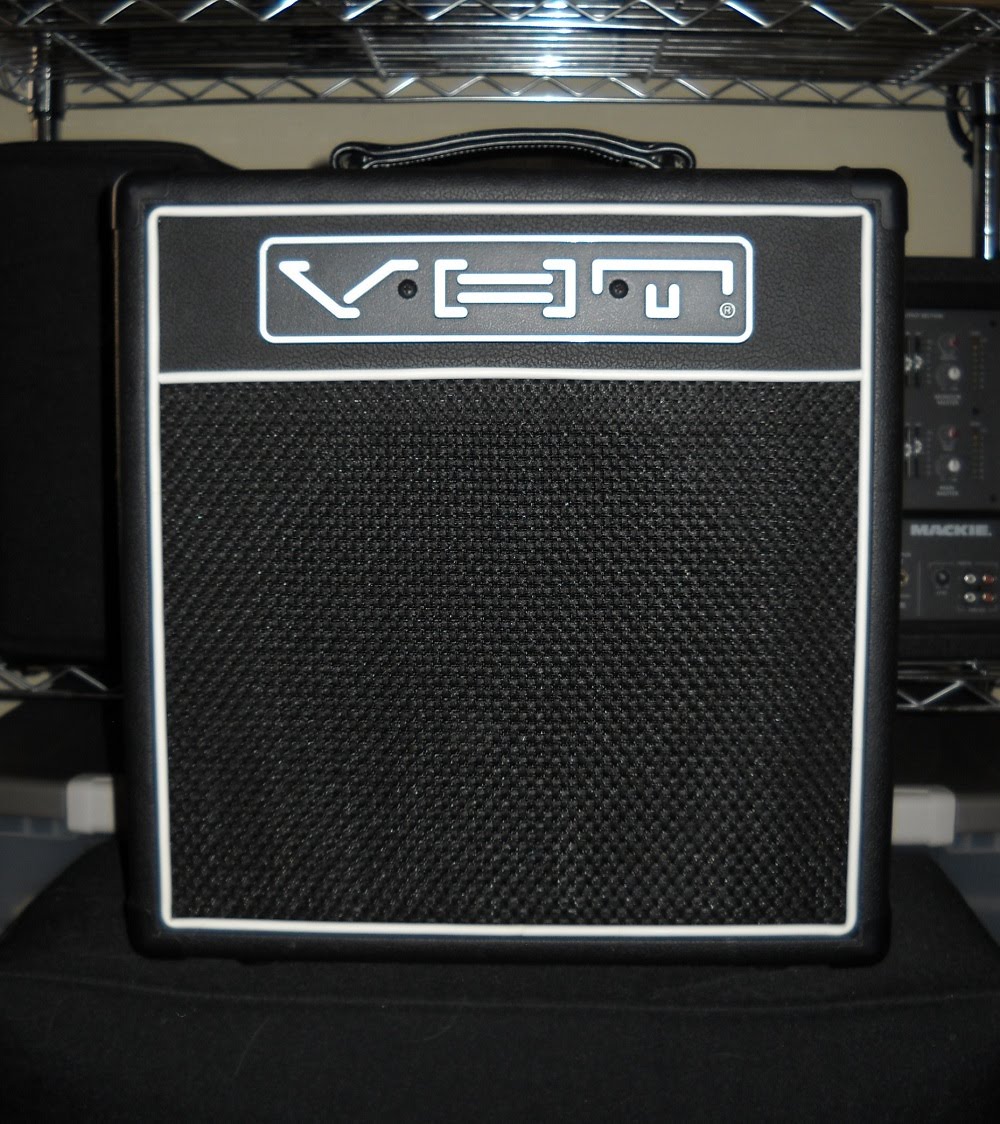
My new VHT Special 6 amp arrived a couple of hours ago and I've already given it a hard workout. My first impressions? I'm impressed! Very impressed. This little amp sounds great right out of the box.

The VHT Special 6 is a point-to-point wired tube amp that sells for $200.00. The power tube is a 6V6, the same tube that powered vintage Fender and Gibson amps and has such wonderful natural harp tone.

Here are a couple of videos I made within minutes of the UPS guy dropping it off. In the first vid I am playing a bullet mic with a Shure CM element, very similar to a vintage Green Bullet mic. In the second video I'm playing a Front & Center mic with a crystal element.


The Shure mic is plugged into the "Lo" input and the F&C mic is plugged into the "Hi" input. Otherwise, the controls were the same for both.


This little 6-watt (nominal) amp has caused me to rethink my favorite starter amps. Already, this VHT seems to have more volume and much better tone than the low-priced EL84 amps such as the Epiphone Valve Junior. It's 10-inch speaker blows away the Fender Champion 600, and it just runs rings around the old Kalamazoo amps. The amp has a natural warmth and crunchiness and it responds well to the pressure you put on the microphone. It is essentially a blackface Fender Champ with 10-inch speaker for $200. Amazing.

The VHT Special 6 amp begs for mods with its intelligent open design, eyelet board, and point-to-point wiring. The next step will be to take this little gem to Mission Amps in Denver for bench testing and upgrades. As I said, stay tuned...

Jump to Step One Mods

Thursday, November 18, 2010

VHT Special 6 Amp

Yesterday I ordered the VHT Special 6 amp from Amazon.com. This will be a new harp project amp, with great potential. Stay tuned on this one....